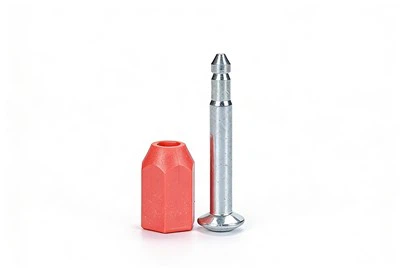


Container cable seals are used to secure shipping containers, trailers, rail freight, tank containers, and bonded cargo during transportation and storage. Their primary purpose is to provide visible evidence of unauthorized access and support cargo integrity throughout the supply chain.
Our high security cable seals are designed for distributors, freight operators, logistics providers, and security seal wholesalers that require reliable serialization, consistent product performance, and compliance with international transport requirements.
Unlike a lock, a cable seal is not intended to physically stop determined theft attempts. Its primary purpose is to make any opening, cutting, or replacement attempt immediately detectable during inspection.
Technical Specifications
|
Specification |
Details |
|
Seal Classification |
High Security Cable Seal |
|
Certification |
ISO 17712:2013 High Security ("H") for 5.0 mm model |
|
Cable Diameter |
5.0 mm / 3.5 mm |
|
Cable Material |
Non-preformed galvanized steel cable |
|
Lock Body Material |
Zinc alloy |
|
Marking Method |
Fiber laser engraving |
|
Custom Options |
Logo, serial number, barcode, QR code |
|
Operating Temperature |
-40°C to +110°C |
|
Removal Method |
Cable cutter or bolt cutter |
|
Usage |
Single use |
Key Advantages
ISO 17712 Certified for International Container Movements
The 5.0 mm version is tested and certified to ISO 17712:2013 High Security requirements, a specification commonly required for international container shipments and customs-controlled cargo movements.
Testing includes:
Tensile performance
Impact resistance
Bending resistance
Shear resistance
The 3.5 mm version is typically selected for domestic transport, trailer security, and applications where ISO 17712 certification is not required.
Non-Preformed Cable for Visible Tamper Evidence
The cable is manufactured from non-preformed galvanized steel strands.
When cut, the individual strands separate and fray rather than remaining in a compact bundle. This makes attempts to restore the original appearance of the cable visible during inspection.
One-Way Locking Mechanism
The internal locking components allow movement in one direction only.
Once the cable is inserted and tightened, reverse movement is blocked by the locking mechanism inside the seal body. Removal requires cutting the cable or damaging the lock body.
This design supports single-use operation and provides visible evidence if the seal has been opened.
Permanent Laser Identification
Each seal is marked using fiber laser engraving rather than surface printing.
Because the marking is engraved directly into the metal surface, identification remains readable after exposure to moisture, abrasion, and routine handling during transport.
Available marking options include:
Sequential numbering
Company logo
Barcode
QR code
Materials Selected for Transport Environments
Container seals are routinely exposed to rain, humidity, vibration, temperature variation, and outdoor storage conditions. To improve durability during transport, the seals use:
- Galvanized steel cable for corrosion resistance
- Zinc alloy lock bodies for dimensional stability
- Laser engraving for permanent identification
- The seals are suitable for operating temperatures between -40°C and +110°C.
OEM and Wholesale Support
Available services include:
Customer logo engraving
Barcode and QR code generation
Private label packaging
Sequential packaging by number range
Reserved numbering allocation for repeat orders
Sequential packaging can simplify warehouse issuance procedures and inventory control for distributors and logistics operators.
Typical Applications
- Shipping containers
- Truck trailers
- Rail wagons
- Tank containers
- Bonded warehouses
- Distribution centers
- Intermodal transport
- High-value cargo shipments
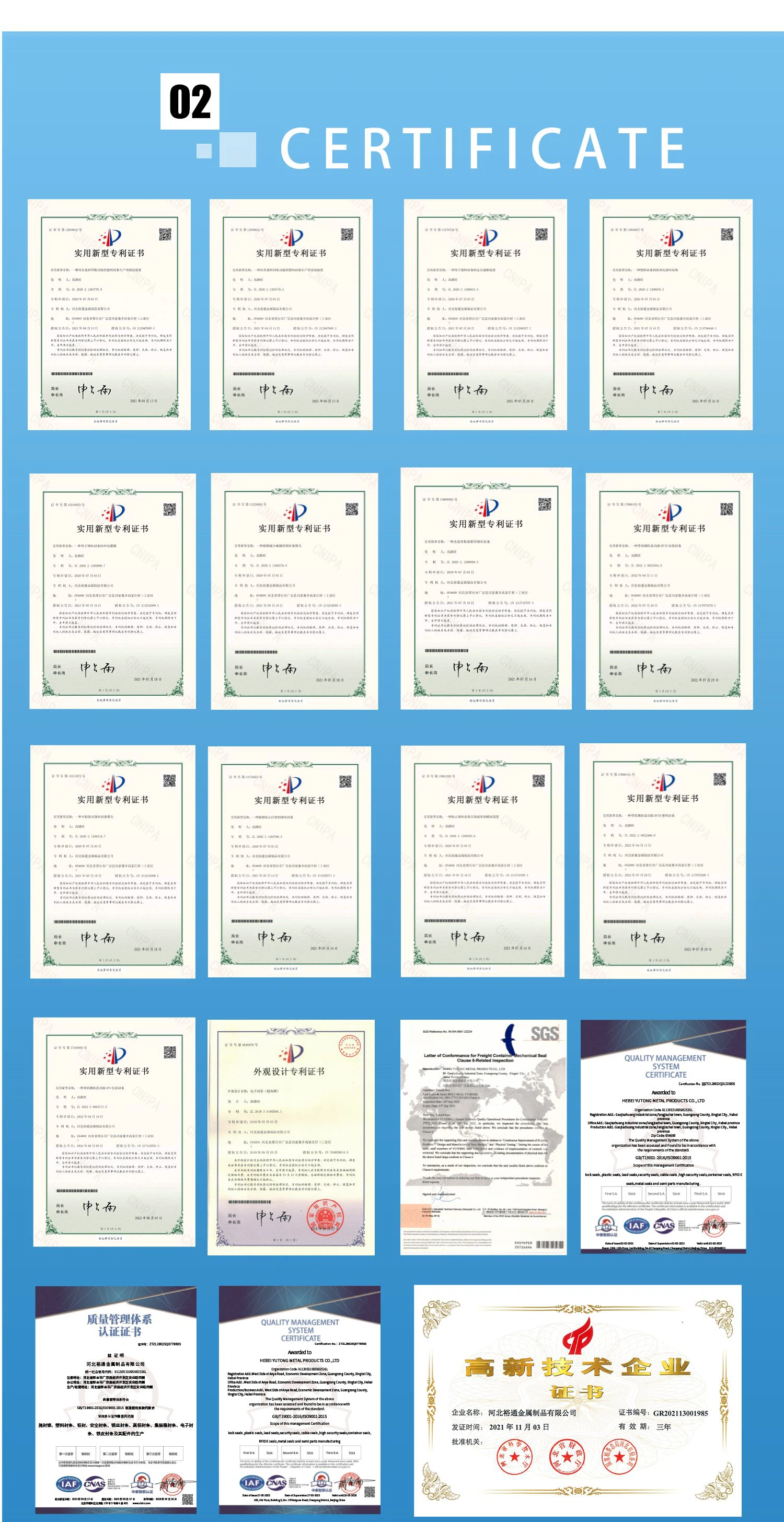
Certificate
FAQ
Hot Tags: tamper evident container cable seals, China tamper evident container cable seals manufacturers, suppliers, factory