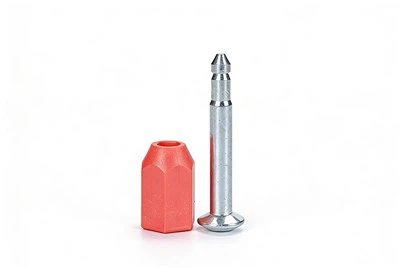


Hey there! As a supplier of Wire Seal Locks, I often get asked about the diameter of the wire in these locks. It's a crucial factor that affects the strength, security, and overall performance of the wire seal lock. So, let's dive right in and explore this topic in detail.
First off, what exactly is a wire seal lock? Well, it's a type of security seal used to secure containers, cabinets, and other items. The wire in the seal is usually made of high - strength materials like stainless steel or galvanized steel. These materials are chosen for their durability and resistance to corrosion, which is essential for long - term use in various environments.
The diameter of the wire in a wire seal lock can vary significantly depending on the specific application and the level of security required. Generally, wire diameters can range from as small as 0.5 mm to as large as 3 mm.


For light - duty applications, such as securing small cabinets or storage boxes, a thinner wire with a diameter of around 0.5 - 1 mm might be sufficient. These thinner wires are more flexible and easier to handle, making them a good choice for situations where you don't need a high level of security. For example, if you're just using a wire seal lock to keep your toolbox closed, a 0.5 mm wire would do the job.
On the other hand, for heavy - duty applications like securing shipping containers or high - value equipment, a thicker wire is required. Wires with diameters of 2 - 3 mm are commonly used in these scenarios. A thicker wire provides greater strength and resistance to cutting or tampering. Shipping companies often use wire seal locks with 2.5 mm or 3 mm wires to ensure the security of their cargo during transit.
Now, let's talk about how the diameter of the wire affects the performance of the wire seal lock. A thicker wire means greater tensile strength. Tensile strength is the maximum amount of pulling force a wire can withstand before it breaks. So, a 3 mm wire will have a much higher tensile strength than a 0.5 mm wire. This is important because it determines how difficult it is for someone to break the seal.
Another aspect to consider is the flexibility of the wire. Thinner wires are more flexible, which can be an advantage in some situations. For instance, if you need to thread the wire through a small hole or around a complex object, a thinner wire will be easier to manipulate. However, too much flexibility can also be a drawback. If the wire is too thin, it may bend or kink easily, which could compromise the integrity of the seal.
When choosing the right wire diameter for your wire seal lock, you also need to consider the locking mechanism. Some locking mechanisms work better with certain wire diameters. For example, a pull - tight mechanism might work more effectively with a thinner wire, as it can be more easily tightened. On the other hand, a more robust locking mechanism might be required for a thicker wire to ensure a secure seal.
We offer a wide range of wire seal locks with different wire diameters to meet the diverse needs of our customers. Whether you're looking for a Rope Wire Seal for a simple home use or a Pull Tight Cable Seal for industrial applications, we've got you covered. Our Wire Cable Seals are made from high - quality materials and are designed to provide reliable security.
If you're in the market for wire seal locks, it's important to choose the right wire diameter based on your specific requirements. Consider the level of security you need, the application, and the locking mechanism. And if you're not sure which wire diameter is right for you, don't hesitate to reach out to us. Our team of experts is always ready to help you make the best decision.
We understand that every customer has unique needs, and we're committed to providing the highest quality products and the best customer service. Whether you're a small business owner looking to secure your inventory or a large corporation in need of shipping container seals, we can offer the perfect solution.
If you're interested in purchasing our wire seal locks or have any questions about the wire diameter or our products in general, feel free to contact us. We'd love to have a chat with you and discuss how we can meet your security needs.
References:
- General knowledge of wire seal lock industry
- Product specifications and research on wire materials and their properties