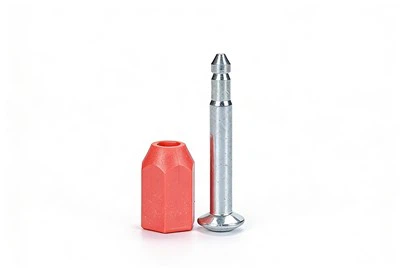


Yo, what's up! I'm a supplier of Trailer Bolt Seals, and today I wanna chat about whether trailer bolt seals are RFID - enabled.
Let's start by getting a basic understanding of trailer bolt seals. These little things are crucial in the shipping and logistics industry. They're used to secure trailers, containers, and other transportation units. The main purpose is to prevent unauthorized access and ensure the integrity of the cargo during transit. You can find more info about Bolt Seals for Shipping Containers. They're tough, durable, and designed to withstand a lot of wear and tear.
Now, what about RFID? RFID stands for Radio - Frequency Identification. It's a technology that uses radio waves to identify and track objects. RFID tags can store a bunch of data, like the product's origin, destination, and even details about the contents. This technology has been around for a while and has found its way into many industries, from retail to healthcare.


So, are trailer bolt seals RFID - enabled? Well, the answer is yes and no. In recent years, there has been a growing demand for more advanced security and tracking solutions in the shipping industry. As a result, some trailer bolt seal manufacturers, including us, have started offering RFID - enabled options. These seals come with an embedded RFID tag that can be read by a compatible RFID reader.
The benefits of having RFID - enabled trailer bolt seals are pretty significant. First off, it makes the process of tracking and monitoring much easier. Instead of manually checking each seal, you can use an RFID reader to quickly scan a group of seals and get all the necessary information. This saves a ton of time, especially for large - scale operations. You can get more details on Shipping Container Bolts which might also be relevant in such advanced tracking systems.
Secondly, it enhances security. RFID tags can be programmed to provide real - time information about the seal's status. For example, if a seal is tampered with or removed, the system can send an alert immediately. This allows for quick response and can help prevent theft or damage to the cargo.
However, not all trailer bolt seals are RFID - enabled. There are still a lot of traditional seals out there that rely on mechanical locking mechanisms. These seals are simple, reliable, and cost - effective. They're a good choice for situations where the need for advanced tracking isn't as high, or where budget is a major concern.
When it comes to choosing between RFID - enabled and traditional trailer bolt seals, there are a few things to consider. Cost is definitely a factor. RFID - enabled seals are generally more expensive than their traditional counterparts. This is because of the additional technology and components involved. But you have to weigh this against the benefits they offer. If the value of your cargo is high, or if you need to closely monitor the movement of your shipments, the investment in RFID - enabled seals might be worth it.
Another thing to think about is the infrastructure required. To use RFID - enabled seals effectively, you need an RFID reader and a system to manage the data. If your company doesn't already have this in place, there will be some upfront costs and learning curves involved.
Let's talk about the technology behind RFID - enabled trailer bolt seals. The RFID tag embedded in the seal is usually a passive tag. This means it doesn't have its own power source and relies on the energy from the RFID reader to function. When the reader sends out a radio signal, the tag gets activated and sends back its stored data.
The data stored on the RFID tag can vary. It could include basic information like the seal's serial number, the date and time it was installed, and the location where it was sealed. Some advanced tags can even store information about the cargo itself, such as its weight, contents, and temperature requirements. You can learn more about Rfid Seals and the different types of data they can handle.
In terms of the manufacturing process, adding an RFID tag to a trailer bolt seal isn't a simple task. The tag needs to be carefully embedded in the seal to ensure it's protected from damage and corrosion. The seal also needs to be designed in a way that allows the RFID signal to pass through easily. Our team has spent a lot of time researching and developing the best methods for creating durable and reliable RFID - enabled trailer bolt seals.
We've also worked on improving the compatibility of our RFID - enabled seals with different types of RFID readers. This is important because different companies might use different brands and models of readers. By ensuring compatibility, we make it easier for our customers to integrate our seals into their existing systems.
As the shipping and logistics industry continues to evolve, I believe the demand for RFID - enabled trailer bolt seals will only increase. With the rise of e - commerce and global trade, there's a greater need for efficient and secure tracking solutions. These seals can help companies reduce losses, improve customer satisfaction, and streamline their operations.
If you're in the market for trailer bolt seals, whether it's the traditional kind or the RFID - enabled ones, I'd love to have a chat with you. We have a wide range of products to suit different needs and budgets. Just get in touch with me to start a conversation about your requirements, and we can figure out the best solution for you together.
References:
Manufacturing and Industry Standards for Trailer Bolts and Seals
RFID Technology Handbook for Logistics and Supply Chain Management